Updated for 2026 · 10+ years of visits · Pokhara-based
Nepal with Kids: 30-Day Nature Itinerary for Families
Our daughters speak Nepalese. We come back every year. This is the itinerary we actually do.
~$37/day whole family
Nature focus
Age-based guidance included
Nepal is our second home. We’ve been coming for over a decade — every year, for months at a time. Our daughters grew up partly here. They speak Nepalese. They know the trails above Pokhara the way city children know their own streets. This is not a destination we visit. It’s a place we return to.
This 30-day itinerary is designed for families who love nature — mountains, rivers, jungles, wildlife — not temples on a schedule and a new hotel every night. The pace is slow, the stays are long, and the experiences go deep. It works for families with toddlers and for families with teenagers. Age-specific guidance throughout will help you shape it for your children.
30 Days at a Glance
In this guide
Nepal by Age — What Works for Your Family
Nepal is one of the most flexible destinations in Asia for families — but what works perfectly for a 5-year-old is genuinely different from what works for a 15-year-old. Here’s the honest guide:
- Pokhara is perfect — gentle lake walks, rowing boats on Phewa Lake, half-days at quiet Begnas Lake, the fishermen’s village
- Lower Seti rafting — warm water, gentle Class 2–3 rapids, and an overnight beach camp that children love completely. Suitable from around age 5–6
- Baby porters on trekking routes — local guides carry small children in traditional wicker baskets, making Poon Hill accessible even for tiny legs
- Hemja Monastery and Tibetan village — calm, beautiful, genuinely child-friendly
- Chitwan jeep safaris — rhinos and crocodiles from the safety of a vehicle. Children are gripped from the first sighting
- Everest Mountain Flight from Kathmandu — see the summit from the air with no trekking required
- Avoid: Lukla flights and altitude above 2,500m
- Poon Hill Trek (4 days) — completely manageable from age 9 with reasonable fitness. The sunrise above the Annapurna Range is one of the defining Nepal experiences for children this age
- Lower Seti rafting — older children can paddle actively and will love both the river and the overnight beach camp
- Village homestays — Dhampus, Astam, or Panchase. One night in a Nepalese family home is the experience children this age most often describe as their strongest memory of Nepal
- Paragliding from Sarangkot — tandem flights over Pokhara and the Annapurnas. From around age 10–12 depending on weight and operator
- Canoe rides and jungle walks in Chitwan — more engaging at this age than jeep-only safaris
- For Lukla/Namche: possible but requires careful planning — see Boxout below
- Lukla flight + Namche Bazaar trek — the world’s most dramatic short flight, followed by a 2-day trek to first sight of Everest. See Boxout below
- Paragliding from Sarangkot — teenagers are typically the most fearless and get the most from this
- Lower Seti in monsoon season — July/August converts to a 1-day high-water ride for physically confident teens
- Annapurna Circuit sections — Jomsom, Muktinath, or Thorung La Pass in 5–7 days for fit teenagers
- Bungee jumping or canyoning near Pokhara — available from reputable operators for ages 14+
- Upper Mustang exploration — restricted area permit required, genuinely remote and rare
Before You Go — Budget, Permits & Essentials 2026
The real daily cost: Our family of four consistently spent around NPR 4,000–5,000 per day (~$37 USD) covering accommodation, food, local transport, and everyday activities. Trek days and activity days cost more; quiet lake days cost less. This is net in-destination spending — it excludes international flights, permits, and travel insurance.
As of 2026, independent trekking without a licensed guide is no longer permitted on major routes including Poon Hill and Everest region trails. The TIMS card has been abolished in the Everest region and replaced by a local municipality permit. Verify current requirements at the Nepal Tourism Board before departure.
Key permit costs — 2026 (per person)
Best trekking: October–November (clear skies, cold nights at altitude) and March–May (rhododendrons in bloom). Chitwan: best October–April when grass is low and wildlife is visible. Lower Seti runs year-round; monsoon months (July–August) convert it to a thrilling 1-day high-water version.
UV radiation is intense and deceptive above 2,000 meters. Factor 50+ applied every 2 hours. Children’s faces burn fast. This is not optional — it is one of the most important practical items on this trip.
Kathmandu — and then Pokhara
Kathmandu is the entry point and worth 2–3 days for its temples, ancient squares, and cultural intensity. We’ll be honest: we don’t base ourselves here. The air pollution is severe and the noise can be exhausting with children after a long flight. We see what we want to see and then we head to Pokhara, where we actually live for weeks at a time.
Swayambhunath (Monkey Temple) — hilltop stupa with city views and holy monkeys who will steal your snacks. Go at dawn. Children who have no interest in temples are transfixed by the monkeys. Bhaktapur — the finest medieval city in the Valley, UNESCO listed, 40 minutes from Kathmandu. The entry fee ($15) is worth it. Pashupatinath — Hindu cremation ghats on the Bagmati River. Intense and genuinely unforgettable for older children and teens. Watch from the opposite bank.
Every morning from Kathmandu, small aircraft fly a one-hour scenic route past the Himalayan peaks — Everest, Lhotse, Cho Oyu — at close enough range to see summit detail. Every window seat gets a clear view. Completely accessible to any age and any fitness level. Takes one morning. Gives families with young children a genuine Everest encounter without altitude risk. Operators: Buddha Air, Yeti Airlines. Cost approximately $170–200/person. Book a few days ahead. One of the best single hours available in Nepal.
Don’t drink tap water. Use hand sanitizer constantly. Ease into street food over 2–3 days. Once adjusted, Nepalese food is wonderful — dal bhat (bottomless rice, lentil soup, vegetables) is filling and costs almost nothing. Start with restaurant dal bhat. Graduate to street food when your system is ready.
Pokhara — The Heart of the Trip
Bus from Kathmandu: 6–7 hours, $7–10 USD. From the moment you arrive, everything slows down — and that is exactly the point.
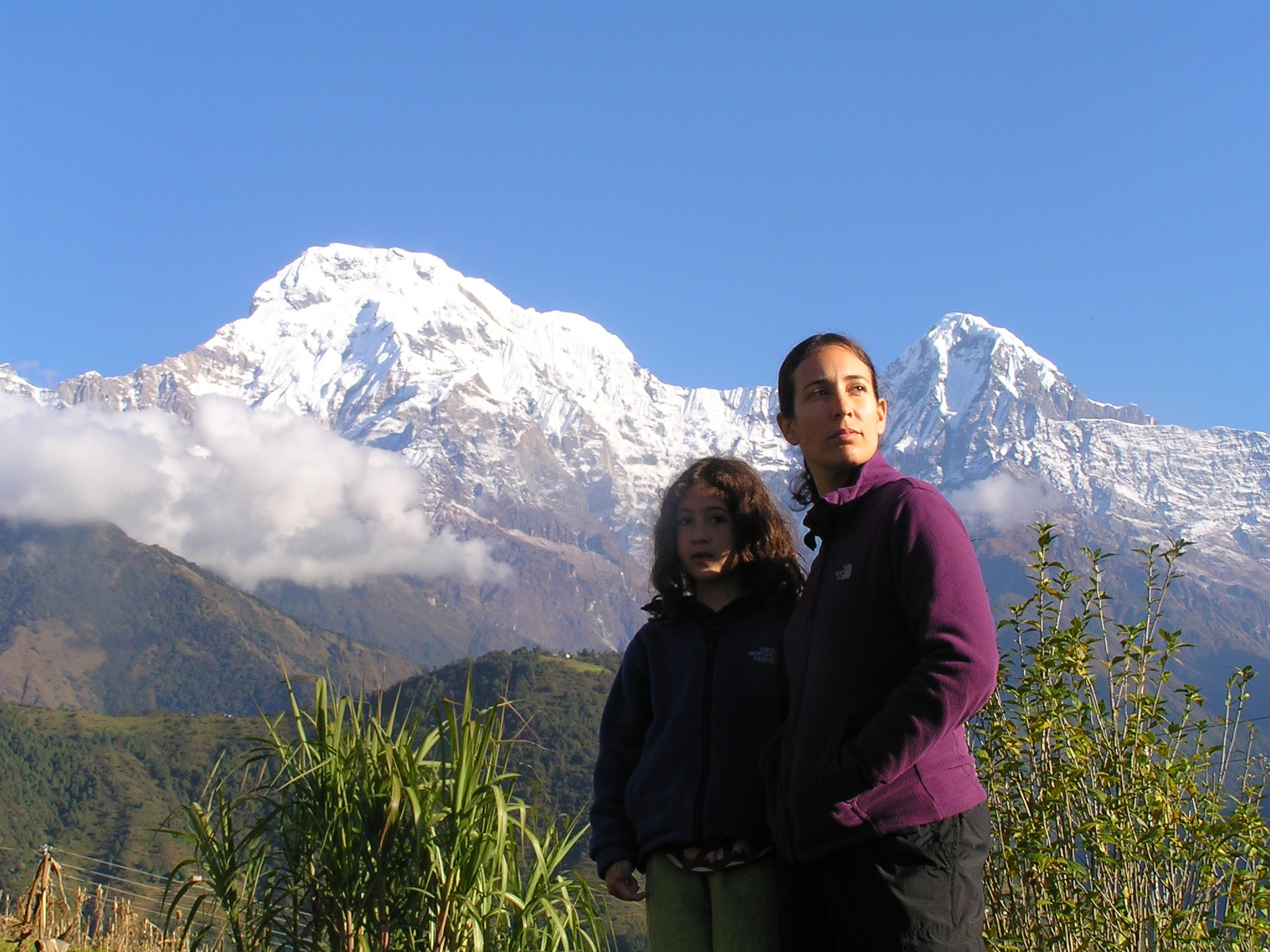
Pokhara is our favourite place in Nepal. I’ll say that plainly. The Annapurna Range rises directly above the horizon. Phewa Lake reflects the mountains at dawn. The town is large enough to have everything you need and slow enough to feel human. Our daughters grew up partly here. They know it the way children know their own neighbourhood. Fourteen days is not too long — it’s enough to begin to understand why people never leave.
Experiences around Pokhara
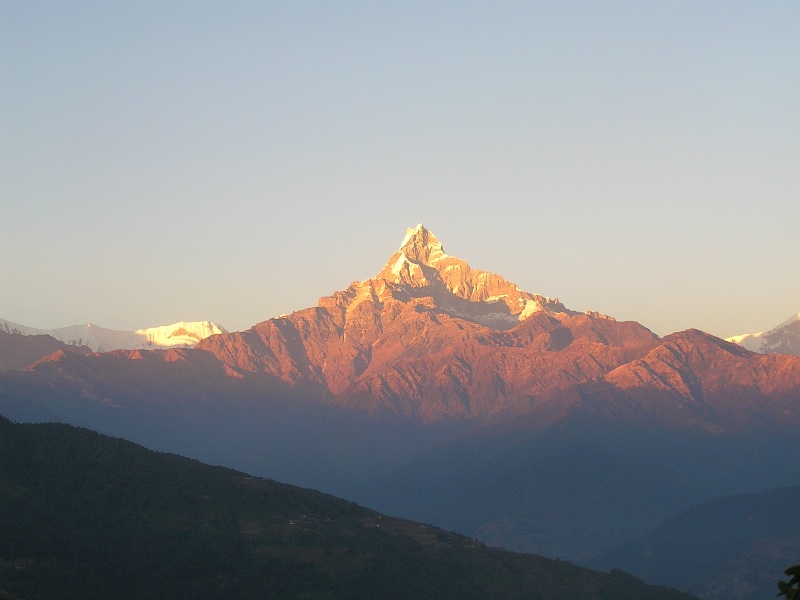
Sarangkot at sunrise — stay the night. Don’t drive up from town at 4am. Spend a night in Sarangkot village (guesthouses from $10–15/night), wake before first light, walk 10 minutes to the viewpoint, and watch Dhaulagiri, Annapurna, and Machhapuchhre come up pink then gold then white. Children who are grumpy about the early hour go silent within minutes of seeing this. It is one of the great mornings on earth.
Begnas Lake — 15 km east of Pokhara, away from the tourist lakeside strip. Quiet, clean, almost no crowds. Rent a boat, swim, sit on the bank with the fishermen. One of the best afternoons in the Pokhara area for families who need to decompress.
Hemja Monastery and Tibetan Village — a Tibetan refugee community a few kilometers from central Pokhara, with one of the most peaceful monasteries in the valley. The craft workshops and carpet-making are genuinely interesting for older children. Calm, beautiful, and off the tourist trail.
Village homestays — Dhampus, Astam, or Panchase — a short drive or gentle trek from Pokhara. One or two nights in a traditional Gurung family home: terraced fields, woodsmoke, dal bhat cooked on a fire, roosters at dawn. Children who stay in a Nepalese village homestay describe it as one of their strongest memories of the trip. It costs almost nothing and is worth everything.
Lumle terraces — the terraced hillsides above Lumle (25 km from Pokhara) are some of the most photogenic farmland in Nepal. A gentle walk between villages gives children a real sense of how the Himalayan foothills are farmed. Rhododendron forests above are spectacular in spring.
Marpha and Lower Mustang — drive north through the Kali Gandaki gorge (no restricted permit needed for this section) to reach Marpha: a whitewashed Thakali village famous for apple orchards, apple brandy, and mountain air you can almost taste. Vehicle-free, perfectly preserved, completely unlike anything else in Nepal. Day trip or overnight.
International Mountain Museum, Pokhara — one of the finest mountain museums in the world. Exhibitions on Himalayan ranges, mountaineering history, and the peoples of the high mountains. Deeply engaging for children who’ve been trekking. Adults find it unexpectedly moving.
Poon Hill Trek — 4 days from Pokhara
The Poon Hill Trek is the perfect family trek in Nepal: 4 days, well-maintained trails, tea house accommodation throughout, and a sunrise at Poon Hill (3,210m) over the Annapurna Range that most families describe as the single most beautiful moment of their Nepal trip. The route passes through rhododendron forests (spectacular March–April in bloom), Gurung villages, and mountain views that require no mountaineering to reach.
Max altitude: 3,210m (Poon Hill)
Best age: 8+ (younger with baby porter)
Permit: ACAP ~NPR 3,000
Guide: Required from 2026
Baby porters — local guides who carry small children in traditional wicker baskets — are available on the Poon Hill route and make the trek accessible for families with children under 8. Ask your trekking agency to arrange one. Daily walking: 4–6 hours; break into morning and afternoon sessions with a proper dal bhat lunch stop at a tea house.
For families with fit, motivated teenagers, adding a Lukla leg to this itinerary is genuinely extraordinary — but it replaces Pokhara days, not adds to them. The Lukla flight (30 min from Kathmandu, one of the world’s most dramatic landings) starts the Khumbu trail. Two days of trekking reaches Namche Bazaar (3,440m) — the highest mountain town most people will ever visit — and the first clear view of Everest rising above the ridge. You don’t need to go further. Budget 5–7 extra days including a Lukla weather buffer (flights cancel regularly — this is not optional padding). Altitude sickness affects teenagers too: ascend slowly, rest every second day at altitude, watch carefully. Minimum honest recommendation: age 14, physically fit, fully motivated.
→ [הכנס כאן Booking.com affiliate link לפוקרה]
Lower Seti River — Family Rafting & Beach Camp
The Lower Seti is one of the best-kept secrets in Nepal family travel, and one of the finest activities of this entire itinerary. It starts 1.5 hours from Pokhara and ends 30 minutes from Chitwan — bridging the two halves of the trip without a single bus journey.
The Lower Seti is a gentle river offering great variety of scenery including local villages, terraced rice fields, waterfalls, and suspension bridges. One night camping on a beautiful sandy beach combined with gentle to moderate rapids and warm water temperature makes it the perfect combination of safety and excitement for families. The guides are skilled and experienced with children. Suitable from around age 5–6 — warm water, patient guides, and a campfire dinner make this genuinely magical for young children and older ones alike.
River class: 2–3
Best age: From ~age 5–6
Price: ~$150/person (2026)
Ends near: Chitwan (30 min)
Season: Year-round
Paddle Nepal runs the 2-day trip year-round with 1-night riverside beach camping — monsoon months (July–August) change it to a 1-day extreme high-water trip. Adrenaline Nepal also runs the family version. Departs Pokhara at 7am, arrives at camp by late afternoon. Day 2 is 2–3 more hours of rafting to the take-out point, with a vehicle transfer to Chitwan. All meals, camping gear, and safety equipment included.
→ [הכנס כאן GetYourGuide affiliate link לראפטינג Lower Seti]
Chitwan National Park
Arriving from the Lower Seti take-out point, Chitwan is 30 minutes away — the most seamless transition in this itinerary. The change is immediate and total: from mountain air to subtropical warmth, from high altitude to dense jungle, from snow-capped peaks to one-horned rhinos moving through long grass. Children experience these two environments as equally extraordinary in completely different ways.
Chitwan is Nepal’s finest national park and one of the best in Asia for genuine wildlife sightings. Bengal tigers, one-horned rhinos, gharial and mugger crocodiles, leopards, sloth bears, over 500 species of birds. This is not a zoo. The animals are wild and present.
Jeep safaris (dawn and dusk) are the primary experience — rhinos are regularly sighted at close range; tigers are possible but never guaranteed. Canoe rides through jungle waterways, with gharial crocodiles watching from the banks, are thrilling even for children who claim to be unimpressed by things. Jungle walks in designated areas with naturalist guides give a completely different relationship with the forest. Birdwatching is exceptional — children who start a tick-list on Day 1 become the most enthusiastic birdwatchers by Day 3.
Elephant back riding is still offered in Chitwan and we strongly recommend against it. Choose operators running ethical chain-free encounters — feeding, walking alongside, observing — which are more meaningful and leave children with a genuine understanding of what an elephant is. Ask specifically about welfare practices before booking any elephant activity.
Jeep safari: All ages
Canoe: Ages 6+
Recommended stay: 5–7 nights
Best season: Oct–April
→ [הכנס כאן Booking.com affiliate link לצ’יטוואן]
Buffer Days — Pokhara or Kathmandu
Bus from Chitwan to Kathmandu: 4–5 hours. To Pokhara: 5–6 hours. These final days are built as a buffer — and in Nepal, you will need them. Whether it’s a Lukla weather delay, an extra day in Chitwan when the tiger sighting almost happened, or simply not being ready to leave Pokhara, these days absorb what Nepal does to carefully planned schedules.
If everything goes to plan, return to Pokhara. Sit by the lake. Go back to the tea house with the best dal bhat. Watch the mountains one more time. The children will want to come back before you’ve left. That is Nepal’s particular effect on people — and it works on children just as reliably as it works on adults.
Thirty days covers Nepal’s nature highlights well but barely touches what the country contains. Families who catch the Nepal habit return for Upper Mustang, the Langtang Valley, the Rara Lake region in the far northwest, Spiti across the Indian border, or simply more time in Pokhara because they couldn’t bear to leave. Nepal rewards returning visitors in a way very few places do — each season shows you a different version of the same extraordinary landscape. Our daughters have been back every year of their remembered lives. They consider it normal. We consider ourselves lucky.
Planning Nepal with your family?
We’ve been coming for over a decade. Our daughters speak Nepalese. Ask anything in the comments — genuinely happy to help.
Famous for its sky-skimming mountains and tough trekking, Nepal isn’t usually the first name that comes to mind when it comes to planning vacations with the kids; however, active families will find an awful lot to love about this this mystical country! Aside from some of the best hiking opportunities on the planet (with options for every level–nobody’s suggesting that families in Nepal should be scaling Everest), visitors can visit National Parks where big cats prowl, see perfectly-preserved ancient kingdoms, marvel at magnificent temples, and camp out at hilltop lodges with views to thrill even the most cynical of older kids and teens.
Our 30-day Nepal Itinerary takes in the best natural attractions and outdoor experiences that a family trip to Nepal can offer, while also taking in the big cities and leaving time to enjoy the experience. Families coming to Nepal should be aware that the best-laid travel plans often go awry, so it pays to be flexible with timings in order to avoid soaring stress levels.
? Box out: Plan for Weather
The weather can have a big impact on your family trip to Nepal. The best trekking conditions are found from September-December and March-May: think clear skies, cool nights, and warm days. From December through February nights are cold, especially at altitude, and summertime offers heavy rainfall and limited visibility. Strong sunscreen is a must at any time of year, especially for young children.
Days 1-7: Kathmandu and Surrounding Area
Kids on a trip to Kathmandu tend to take great delight in the fact that cows have right of way here, and cattle stroll at a leisurely pace through this hot and hectic city. Take a day or so to recover from the flight and just adapt to the way of life here, riding rickshaws, goggling at the ornate temples and generally soaking up the fascinating street scene.
? Tip: It’s not uncommon for tummy trouble to impact on a family visit to Nepal. Use hand sanitizers, wipe little hands carefully, and use straws rather than drinking directly from cans. Street food can be a large part of the fun, but exercise caution and, if in doubt, seek recommendations from fellow travelers and/or hotel or hostel staff about places (or foods) to avoid.
Nature-loving families in Kathmandu should be sure to visit Swayambhunath (better known as Monkey Temple), a magnificent temple sitting pretty on a hilltop where the fresh air is welcome contrast to the pollution of the city. The biggest attraction for kids are the holy monkeys that keep watch over the entrance, giving the temple its nickname. Next, visit the Hindu temple Pashupatinath, with its robed, dreadlocked and painted saddhus (holy men) flanking temple courtyards. Families should also check out the ancient city of Bhaktapur, a 40-minute drive from the city center (and a UNESCO World Heritage Site). Bhaktapur hosts its own resident Kumari, a child who assumes the role of Living Goddess (there’s also a Kumari in Durbar Square in Kathmandu). Rattling through the streets of Kathmandu on a rickshaw is a fun introduction to Nepal, and the surrounding Kathmandu Valley is strewn with temples and a good place for short treks (ranging from half a day to several days), and family accommodation in Kathmandu is both plentiful and affordable.
? Tip: It’s perhaps the ultimate hack for families hiking in Nepal: “baby porters” will carry young children and babies in wicker baskets, allowing parents to keep their hands free and stride on with confidence. Intrepid families can bed down in stone lodges, which are found along most established trekking routes. It makes sense to limit the duration of these treks to a day or so, though, as all but the most patient of small children will soon want to stretch their own legs.
Day 8-14: Sagarmatha National Park
It’s remote, but for the maximum bragging rights, your family trip to Nepal needs to include a stay at Sagarmatha National Park, home to the most famous mountain in the world: Mount Everest. Officially the highest national park in the world, most of the terrain is more than 3,000 meters above sea level. At around 135 kilometers from Kathmandu, the best way for families to arrive is by organized excursion. Prices from around $50 USD include transport only, and expect to pay more for accommodation, food and activities. Accommodations range from mountain lodges and rustic campsites to slightly more luxurious options, and there are even family-oriented treks up to the legendary Everest Base Camp. Of course, it’s vital to research any trekking companies in advance, and make sure it’s not too taxing a trek for your little ones. Visits here are ideally suited to families with some solid hiking experience, but just admiring the snowcapped peaks (along with Everest, many others rise more than 6,000 meters above sea level) and walking through the gorges and silver fir forests is an unforgettable experience. In the spring, the lower-lying areas of the park are a riot of color as rhododendrons and other wildflowers bloom in abundance.
? Box out: Animal Inhabitants
Bring powerful binoculars. Eagle-eyed visitors to the park may spot resident animals such as the Himalayan tahr, serow, wolves, and even Himalayan black bears. Harder to spot are the rare snow leopard, red panda and crimson-horned pheasants.
Day 15-21 Pokhara and Annapurna Hiking (Via Kathmandu)
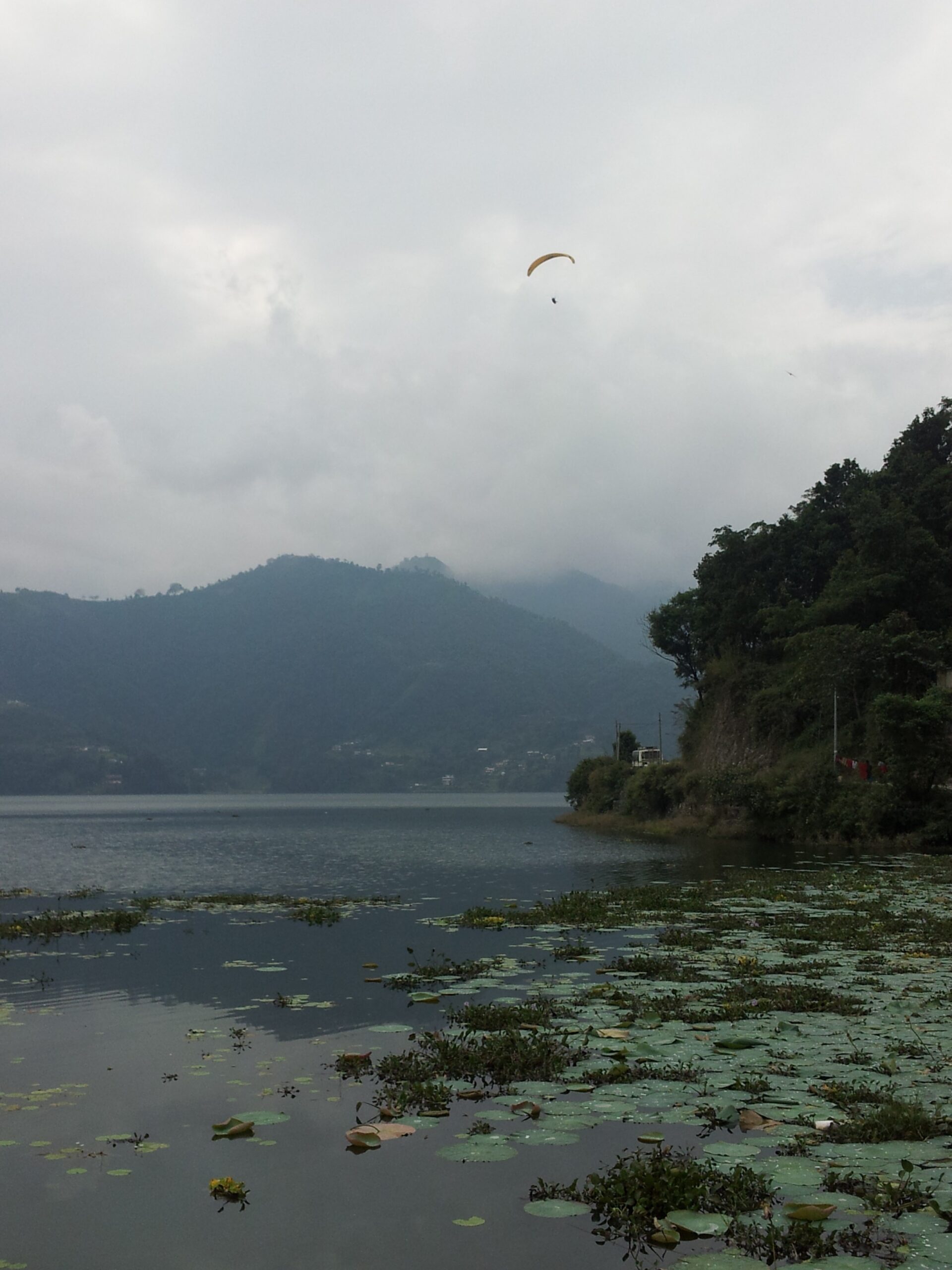
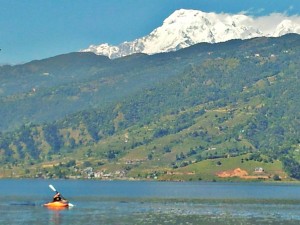
Via a return visit to Kathmandu, board the tourist bus (more comfortable, and a lot faster, than the local mini-buses, and an inexpensive option at around $7 USD) for Pokhara, Nepal’s second biggest city. Framed by jaw-dropping views of the Annapurna Range (a stretch of the Himalayas), the city is famous for the vast lake at its centre, and the city soon gives way to wild nature. Outdoorsy activities for families in Pokhara include boating, horse riding, trekking and – for those with a head for heights – paragliding. The most obvious outdoor attraction in Pokhara, however, is trekking around the magnificent surrounding countryside and drinking in the fresh air and the views. A good short hike is up to the Shanti stupa (temple) above the town, and reached by a boat across the lake followed by a wooded walk. More challenging is the route up to Sarangkot lookout point (this is where daredevil paragliders set off from, for birds eye views of city and mountains).
After spending a couple of days enjoying this low-key town and its family-friendly attractions, set out to explore the mountains. The Annapurna Circuit, and many more hiking opportunities, spread out from here, and offer ample opportunity to spend quality family time in the hills. Some treks are more challenging than others, and all involve (naturally) some hills, but it’s a richly-rewarding experience.
Older children and teens with some hiking experience (younger kids can be carried by porters) may relish the challenge of the 40-mile Poon Hill hike, which is spread out over several days and takes in peaks such as Annapurna I (over 26,000 ft/7,200m), and the enormous ‘holy mountain’ of Machhapuchhre, otherwise known as Fish Tail, which dominates the skyline.
Day 22-24 Kurintar
Regular buses make the 2-3 hour drive to Kurintar, a pretty riverside town famed for its white water rafting and its cable cars. Older children, teens and adults can spend a day enjoying some white knuckle thrills on the Trisuli River (instructors are on hand to show newbies the ropes). A couple of good accommodations here include a famous spa resort, with kid-pleasing playground, and the dizzying 20-minute cable car ride up to the Manakamana Temple (cable car fare approx $7) offers breathtaking birds’ eye views without taxing little legs. With the mountain views, fresh momos (Nepalese dumplings) and river fun, families in Kurintar may well want to linger here a few days.
Day 25-29 Chitwan
Prepare for some serious kiddie kudos as you head to one of Nepal’s biggest natural attractions – Chitwan National Park – a vast forested wetland whose inhabitants include tigers, rhinos, and crocodiles. Accommodation options here include eco lodges, safari camps or simple homestays – visitors to Chitwan with kids can pick their desired price range, and comfort level. The best way to reach here is by private transfer or bus – it’s a drive of around one hour, expect to pay around $10 USD for a private car ride.
A trip to Chitwan will likely be a highpoint of any nature-based family trip to Nepal, and visitors should set aside the best part of a week to make the most of it. Visitors can take self-guided treks, but given the wild beasties that live here, and not to mention the possibility of getting lost, it’s advisable to go with a guide (individual or group).
Active families in Chitwan can enjoy thrilling activities such as early morning riverboat rides and kayaking through jungle wetlands (keep little fingers inside the canoes – snapping crocodiles live here!), and can also take part in jeep safaris, keeping eyes peeled for the resident rhinos and elusive Bengal tigers. Birdwatching is another highlight of a trip to Chitwan National Park – make it fun for kids by making a list of the colorful birds that live here, and seeing who can tick the most off the list.
? Tip: Ethical Elephant Excursions
For ethical reasons, many visitors to Chitwan will choose to avoid the elephant back rides that are still easily available at the park. A more ethically-sound alternative is to arrange a stay at one of the cruelty-free camps such as TigerTops, where guests can stay as an honorary member of the chain-free elephant pack, helping with feeding and washing and taking strolls alongside the magnificent animals.
Day 30: Kathmandu
Tourist buses make the 5-7 hour ride back to Kathmandu (prepare for some hair-raisingly high and narrow passes as well as some breathtaking views. Once back in the big city, you might want to overnight (and sink a couple of nerve-saving drinks) before boarding your plane back home.
