Updated for 2026 · From the Ganges to the Himalayas
India with Kids: 7 Crazy Activities for Thrill-Seeking Families
North India focus
Himalayas + rivers + desert
Tested with real kids 🙂
India and extreme activities go together like a good curry and raita. The mighty Himalayas, six major rivers, vast stretches of high-altitude desert, and the sheer dramatic scale of the subcontinent make India one of the most adventure-packed destinations on earth — and there is absolutely no need to leave the thrills behind just because you have children along. We’ve been coming to India with our kids since they were small, from the foothills of Manali to the monasteries of Spiti and the cold deserts of Ladakh. These are the activities we’ve done, seen, and recommend.
In this guide
India rewards families who push past the obvious. The Taj Mahal is extraordinary — go. But the India that stays with your children for the rest of their lives is the one with cold river water rushing past their ears at 4am, or a horizon that is entirely made of mountains at 4,000 meters, or the strange silence of a Spiti village that has been there for a thousand years. That India is available to almost any family willing to go looking for it.
1. White Water Rafting & Cliff Jumping — Rishikesh Updated 2026
Rishikesh sits in a sheltered curve of the Ganges, where the river emerges from the Himalayan foothills cold, clear, and fast. It is India’s undisputed adventure capital — and the white water here is genuinely world-class, ranging from gentle Class I stretches perfect for younger children to the thundering Class IV rapids of the Shivpuri section that will terrify adults in the best possible way.
The typical family package is a 16-kilometer rafting run from Shivpuri to Rishikesh, taking 2–3 hours, with cliff jumping stops built into the route. The cliffs range from 10 to 30 feet — jumpers start at the lower ledges and build height as confidence grows. The water below is deep and clear. The guides are experienced. The rush of the jump — that moment of commitment before you leave the rock — is one of the most purely exhilarating experiences available anywhere in adventure travel.
Duration: 2–3 hours
Price: ~₹600–1,200/person (2026)
Best season: Oct–Nov, Feb–May
The rafting and cliff jumping are almost always combined in a single half-day experience — you raft to the cliff site, jump, then raft on to town. The value for money is extraordinary by any global standard. Rishikesh itself is worth 2–3 days for any family: the ghats at dusk, the evening Ganga aarti ceremony, and the extraordinary food scene make it one of the most compelling towns in North India.
Book through established operators with safety records — ask specifically about guide certifications and equipment age. Avoid operators who offer dramatically lower prices than the going rate. The Ganges is holy water, which also means it receives offerings — check current water quality advisories during monsoon season (June–September) when the river is at its most turbulent and least clean.
Book Rishikesh rafting: GetYourGuide and Viator both have Rishikesh rafting packages with verified operators and flexible cancellation.
→ [הכנס כאן GetYourGuide affiliate link לרפטינג בריישיקש]
If you’re in Rajasthan in November, the Pushkar Camel Fair is one of the great spectacles of India — thousands of camels, horses, and livestock descend on the desert town of Pushkar for the world’s largest camel fair. The atmosphere is extraordinary: dust, color, music, traders from across Rajasthan, and a fairground energy unlike anything else. The fair typically runs for 5 days around the full moon in November (Kartik Purnima). Families who time a hot air balloon ride over Rajasthan to coincide with the fair from above will have one of the most memorable views in all of travel.
2. South Asia’s Longest Zipline — Flying Fox, Kikar Lodge Updated 2026
In the Shivalik Hills of Punjab, about 90 minutes from Chandigarh, the Flying Fox at Kikar Lodge runs five ziplines totaling 1.4 kilometers of flight above forested valleys and jungle canopy. It is the longest zipline tour in South Asia, operated to the international EN15567 safety standard and inspected annually. The longest individual wire sends you soaring over two valleys — the ground drops away completely and for a few seconds it is genuinely, wonderfully terrifying.
The experience takes approximately 1.5 hours including a 20-minute practice session on low-lying wires before the main event. Children need to be at least 1.4 meters tall to participate. Adults accompany children under 14. The lodge itself — set in 1,800 acres of private forest reserve — is a worthwhile destination in its own right, with paintball, quad biking, night safaris, and bird watching among its other activities. This makes it an easy addition to any Punjab or Rajasthan itinerary.
Min. height: 1.4 meters
Duration: 1.5 hours
Distance from Chandigarh: ~90 min
An early morning zipline run — before the heat of the day — is particularly spectacular, when the mist sits in the valleys below you. The lodge also offers night zipping on request. Book activity time slots on arrival rather than in advance; walk-in bookings are usually possible midweek.
3. Canyoning in Manali
Manali is one of those places that gets into you. The town itself is overrun with tourists in peak season, but 20 minutes in any direction and you’re in a different world — high valleys, pine forests, waterfalls crashing down through gorges, and the permanent backdrop of the Himalayan snow line. This is the setting for canyoning in India: climbing, jumping, abseiling, and swimming down sheer rock faces, crashing waterfalls, and natural rock pools.
Canyoning is technically demanding but surprisingly accessible — the techniques are straightforward to learn, and experienced guides adjust the route’s difficulty to match their group. Physically fit participants from around 14 years old can manage the standard Manali canyoning routes. Younger children can join the easier entry-level sections with appropriate operators.
Duration: Full day
Best operator: Himalayan Trails, Manali
Best season: May–June, Sept–Oct
Stay in Vashisht village rather than Manali town — it’s quieter, more authentic, and puts you above the tourist chaos. The hot springs in Vashisht are excellent for recovery after a canyoning day. Manali is also the gateway to the Rohtang Pass and the road to Spiti — combine it with Activity 5 below for one of the great Himalayan road journeys.
4. Hot Air Ballooning over Rajasthan
This is the one activity on this list that every member of the family can do regardless of age, fitness, or appetite for physical challenge. A hot air balloon at dawn over Rajasthan — watching the sun rise over forts, temples, and desert — is one of the most visually extraordinary experiences available anywhere in India, and one that children and grandparents can share equally.
The balloon rises gently at first light, when the desert air is cool and still, and within minutes you’re looking down at a landscape that seems to belong to another century. Camels move along tracks between villages. Forts rise from hilltops. The desert changes color as the sun comes up. Children who were skeptical about getting into a wicker basket 1,000 feet above the ground tend to be completely silent with wonder for most of the flight.
Duration: 45–60 minutes flight
Price: ~$80–120/person (2026)
Best season: Oct–Feb
Pushkar is one of the most beautiful and spiritually atmospheric towns in Rajasthan — a sacred lake surrounded by ghats, 52 bathing steps, and hundreds of temples. The town is entirely vegetarian and alcohol-free, which makes it remarkably calm for India. A dawn balloon flight over Pushkar, followed by breakfast on the lake, is one of the finest mornings possible on a Rajasthan itinerary.
Book Rajasthan ballooning: SkyWaltz (skywaltz.com) is the longest-established balloon operator in Rajasthan with a strong safety record. Also available through Viator and GetYourGuide.
→ [הכנס כאן Viator affiliate link לבלון אוויר חם ראג’סטאן]
5. Trekking in Spiti Valley — The Himalayas Most Families Never See New
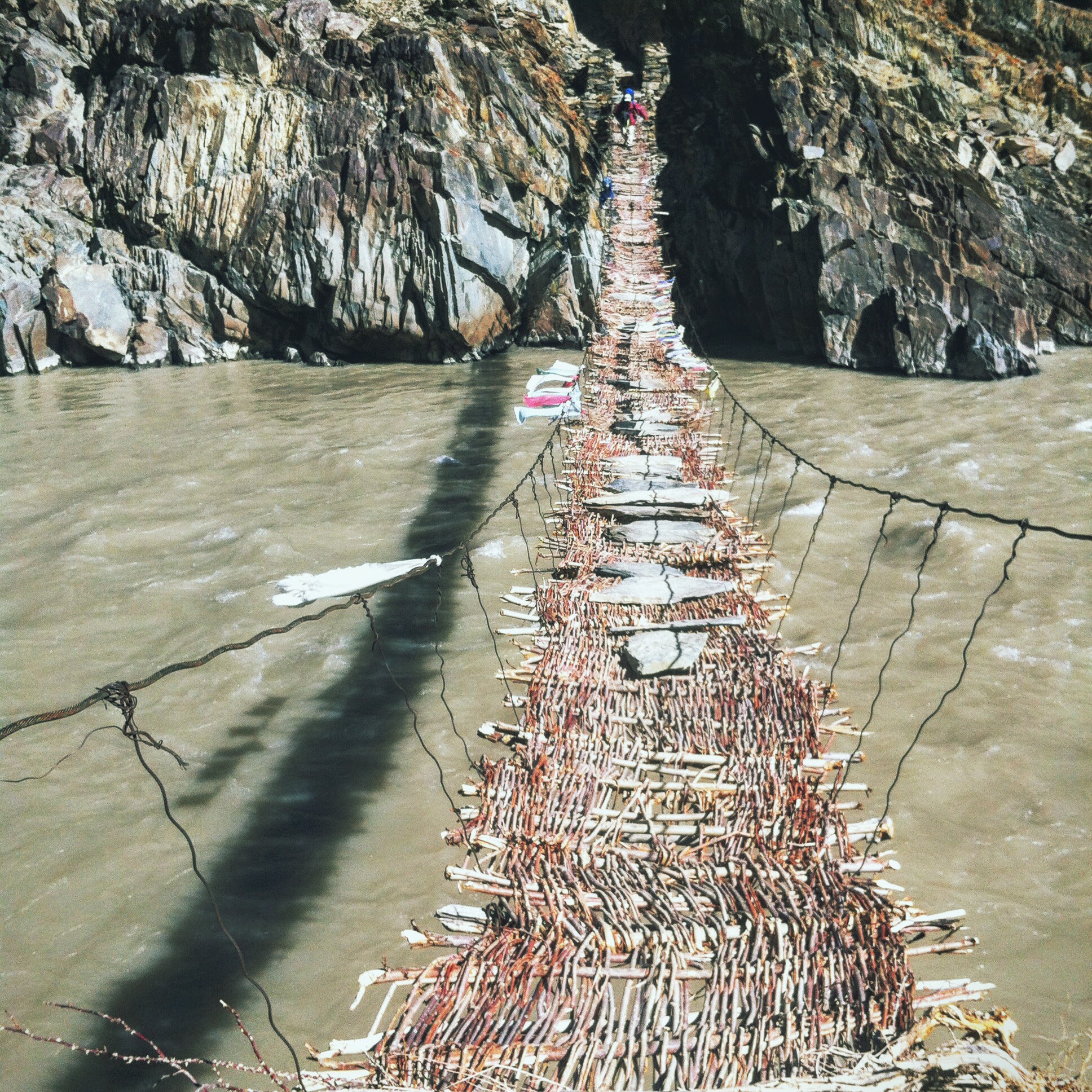
Most families who go to India don’t go to Spiti. Most families who travel in the Himalayas go to Nepal or Ladakh. Spiti sits between them — a cold desert valley at 3,800–4,000 meters, surrounded by mountains that look like the surface of the moon, dotted with monasteries that have clung to cliffsides for a thousand years. It is one of the most extraordinary landscapes on earth, and it is almost entirely empty of tourists compared to what it deserves.
The adventure activities in Spiti are not thrill rides — they are immersions. Trekking between the ancient villages of Langza, Hikkim, Komic, and Demul takes you through landscapes of such severity and beauty that children tend to go quiet in a way that no theme park ever manages. Hikkim has the world’s highest post office, at 4,400 meters — your children can post a letter home from the top of the world. The Key Monastery above Kaza is one of the finest Tibetan Buddhist monasteries outside Tibet. Chandratal Lake — the Moon Lake — at 4,250 meters is a turquoise jewel surrounded by scree and snow that seems entirely implausible.
Best age: 8+ for day treks, 12+ for overnight routes
Best season: June–September (road open)
Altitude: 3,800–4,500m
Spiti is high enough that altitude sickness is a genuine concern, especially for children. Acclimatize properly — spend 1–2 nights in Manali (2,050m) before driving to Kaza (3,800m). Ascend slowly. Watch children carefully for headache, nausea, or unusual fatigue. Descend immediately if symptoms are serious. The drive from Manali to Kaza takes 1–2 days and is itself one of the great mountain road journeys — the altitude gain is gradual enough to acclimatize safely if you don’t rush.
Stay in homestays rather than guesthouses wherever possible — the local families of Spiti are among the warmest hosts in India, and the food (dal, rice, Tibetan butter tea, momos) is excellent. Spiti Holiday Adventure and local guides in Kaza can arrange trekking, jeep safaris to remote villages, and overnight camping. Mobile signal is limited; download offline maps before you arrive.
The road from Shimla through Kinnaur to Spiti — the Hindustan-Tibet Highway — is one of the most dramatic drives on earth: a two-lane road carved into cliff faces above the Sutlej River, passing apple orchards, ancient forts, and Tibetan villages before ascending into the cold desert of Spiti. It takes 2–3 days each direction and requires a protected area permit for Kinnaur. Families who drive it rather than flying into the nearest airport will experience India in a way that almost no tourist ever does. The permit is easy to obtain in Shimla. The memory is permanent.
6. Cycling & Trekking in Ladakh New
Ladakh sits at the roof of the world — a high-altitude desert kingdom between the Karakoram and Himalaya ranges, governed for centuries by Buddhist monks and now one of India’s most compelling destinations. Leh, the capital, sits at 3,500 meters. The Khardung La road pass — one of the highest motorable roads on earth at 5,359 meters — connects it to the Nubra Valley beyond. The Zanskar River freezes solid in winter, creating the famous Chadar Trek, one of the most extraordinary winter journeys on earth.
For families, Ladakh offers adventure at multiple levels. Day hikes from Leh to the surrounding villages and monasteries are manageable for children from age 8 with proper acclimatization. Mountain biking from Leh on the Nubra Valley road is one of the great cycling experiences in Asia — high, cold, extraordinarily beautiful. Multi-day treks in the Markha Valley offer families with fit, older children a genuinely remote Himalayan experience. The monasteries of Thiksey, Hemis, and Diskit are accessible to any age and rank among the finest in the Buddhist world.
Best age: 8+ for day hikes, 12+ for treks
Best season: June–September
Acclimatize: Minimum 2 full rest days in Leh before activity
Leh airport is at 3,256 meters. Flying directly from sea level to this altitude and immediately doing physical activity is genuinely dangerous — altitude sickness can be severe and rapid. Spend a minimum of 2 full days resting in Leh before any significant hiking. Drink water constantly. Watch children carefully. Diamox can help but consult a doctor before traveling with it. Descend immediately to a lower altitude if anyone shows serious symptoms.
7. Flyboarding in Goa
For the family member who needs to feel like a Marvel superhero: at several beaches in Goa, a flyboard attaches to a jet ski’s water output and sends riders shooting up to six meters above the sea surface on a column of water. You look absurd. You feel incredible. Children watching from the beach tend to alternate between laughing and demanding their turn.
Flyboarding is strictly for older teens and adults — the balance required and the physical demand make it unsuitable for younger children. But for families with teenagers, it’s one of the most memorable activities available on the Indian coastline. It doesn’t take long to master the basic hover, and the guides are patient with first-timers. The longer you can stay up, the more ridiculous and wonderful it becomes.
Minimum age: 16+ (varies by operator)
Duration: 20–30 minutes session
Price: ~₹2,500–4,000/session (2026)
Goa divides families. The beach-party reputation of North Goa is real and can feel overwhelming with children. South Goa — Palolem, Agonda, Patnem — is quieter, more family-appropriate, and genuinely beautiful. The water sports are concentrated in North Goa; factor in a day trip from the south rather than basing yourself in the middle of the action if you have younger children.
India’s Adventures Don’t Stop Here
Seven activities barely scratches the surface. India is too enormous and too varied for any single list. Here are more worth knowing about:
- Skiing in Auli, Uttarakhand — India’s best ski resort, with slopes at 2,500–3,050 meters and a gondola that offers views of Nanda Devi, the second-highest peak in India. Season runs January–March. Largely unknown to Western skiers — almost no queues.
- Jungle safaris in Ranthambhore or Kanha — India’s tiger reserves offer some of the best wild tiger sightings on earth. Ranthambhore in Rajasthan is easier to combine with a Jaipur–Pushkar itinerary; Kanha in Madhya Pradesh is more remote and arguably more rewarding. Both have jeep safaris suitable for children from age 6.
- Sea kayaking in the Andaman Islands — The Andamans are India’s least visited spectacular destination: remote islands in the Bay of Bengal with pristine coral reefs, dense jungle, and crystal-clear water. Sea kayaking between the islands is extraordinary, and the snorkeling rivals anywhere in Southeast Asia.
- Paragliding in Bir Billing, Himachal Pradesh — One of the best paragliding sites in Asia, at 2,400 meters with tandem flights over pine forests and Himalayan valleys. More consistent conditions and better scenery than the more famous Manali site. Suitable for ages 8+ for tandem flights.
- Camel trekking in the Thar Desert, Rajasthan — A night in the sand dunes of Jaisalmer or Sam, sleeping under what may be the most star-filled sky your family has ever seen, is one of those experiences that requires no adrenaline to be unforgettable. Children love it entirely.
More dedicated posts on Spiti, Ladakh, and Rajasthan with families are in progress — subscribe below to be notified.
Planning India with your family?
We’ve been traveling India with kids for years — from the Ganges to the Himalayan cold desert. Questions welcome in the comments below.
India and extreme sports go together like a good curry and raita. With the mighty Himalayas counting among its seven mountain ranges, India is also home to six major rivers and vast swaths of jungle. This diverse and dramatic topography makes India prime territory for a an adrenaline-pumping excursion or two, and there’s no need to leave the thrills and spills by the wayside just because you’ve got the kids along. These heart-racing activities will guarantee major kudos with the kids, whether they can take part themselves or cheer you on from the sidelines.
Cliff Jumping in Rishikesh
Who doesn’t want to fling themselves of a 30-foot-high rocky cliff edge for fun? Suitable for pretty much anybody aged 12 and over (vertigo sufferers, non-swimmers or anybody with an extreme fear of heights need not apply), this heart-racing experience draws hordes of thrillseekers to the Himalayan town of Rishikesh, which sits in a sheltered bay on the banks of the River Ganges. This is not a DIY activity–the right gear and preparation are vital to making this disaster-free. Tour operators such as River Rafting Rishikesh will make sure everything goes smoothly.
You got this: It might sound terrifying, but it’s hard to beat the thrill of jumping off a sheer rock face into the ultra-refreshing waters of the Ganges. The jumps are usually enjoyed as part of a rafting trip, and jumpers can start off low and build up their height as they build courage. The rush gets faster and more intense the higher you go!
Be Snake Savvy: Would-be adventurers in India should be on their guard for snakes – there are some 270 species in India, around 60 of which are highly venomous. The beautiful King Cobra is the world’s largest venomous snake, while the Indian Python and Saw-Scaled Viper are other slithering beasts you definitely don’t want to bump into. Snake lovers can see the beasts in relative safety at Nag Panchami, the Hindu snake festival held each year to honor the beautiful, but deadly creatures.
Flyboarding in Goa
You could spend your time in Goa getting some down time on the beach, or you could spend it shooting straight out of the water like a Marvel superhero. Goa is India’s biggest water sports destination, and the latest trend among thrill-seekers at Baina Beach is Flyboarding, where a board is attached to a jet ski and sent soaring into the air by a powerful stream of water. It looks incredible and, while this is strictly for older teens and adults, the little ones are going to be agog at the grownups’ new-found superpowers. It doesn’t take long to master the moves (Atlantis Watersports will soon have you up in the air), although you’ll need to be a reasonably strong swimmer, and leave your sense of fear at home.
Down a Notch: If Flyboarding is a step too far, families in Goa might want to start with Kneeboarding. It requires less balance than waterskiing and wakeboarding, so it’s a good option for members of the family looking to build confidence in the water.
Take South Asia’s Longest Zip Tour
Wheeeeee! Families in northern India can soar over the jungle canopy on South Asia’s longest zipline tour: a two-hour Flying Fox aerial adventure that will thrill anybody with a love of heights and a penchant for good views. It’s worth making the 80-kilometer trip from Chandigarh to reach Kikar Lodge, in Nurpur Bedi, to fly above the forest and valleys on five ziplines with jungle canopy walks in between. If any members of the family are fearful fliers, not to worry! You can distract them with the lodge’s other adventures, like paintballing and night safaris.
⛷ Boxout: Shiny Happy People
The city of Chandigarh, capital of the states of both Punjab and Haryana, was voted the happiest in India in 2017. With low crime levels and high per capita income, its historic center is a UNESCO World Heritage site and a pleasant place for families to take a stroll.
Canyoning in Manali:
Canyoning is like several adrenaline-pumping activities rolled into one, and there’s no better place to practice it than the high altitude Himalayan resort town of Manali. Canyoners will climb, jump, abseil, scramble and swim down sheer rock faces, crashing waterfalls and rock pools. Although it looks challenging, it’s surprisingly easy to master the techniques, and is suitable for physically fit people from the age of around 14 and up. Don’t attempt to go it alone though! Operators such as Himalayan Trails will make sure all the safety measures are in place before you set off on your adventures.
Hot Air Ballooning in Rajasthan
This is one adventure that’s open to every member of the family regardless of age, fitness level or fondness for exhausting physical activity. It might seem like a soft option, but soaring high into the air over mountains and villages is definitely going to get the blood pumping. At around $260 USD per person with SkyWaltz, the price might also send your pulse racing, but getting a bird’s eye view of the landscape, fortresses and palaces is pretty incredible.
Inside Info: Families are in for a treat if they take their flight during November’s Pushkar Camel Fair, when thousands of camels, horses and cattle head to Rajasthan in one of India’s longest-established and most colorful festivals. Pushkar is also one of the top shopping destinations in Asia!
Need more ideas regarding how to travel on a budget with your family? Check out my eBook available for download on Amazon here!
